







MAD SR, s.r.o.
Školská 36
979 01 Rimavská Sobota
Slovakia


5 February 2026
When most people hear “Volkswagen,” they think of models like the Golf or Passat. But when you say “Volkswagen Group,” few know which brands belong to this family—or, in other words, this “ecosystem.” From Škoda to Porsche, today we’ll introduce the group, highlight the differences between its models, and show you our solutions for maintaining interior quality across selected brands.
VOLKSWAGEN AS A BRAND VS. VOLKSWAGEN AS A GROUP
VW is one of the most well-known car brands among the general public. It covers all kinds of models—from hatchbacks (Golf), sedans (Passat), and wagons/estates (Arteon) to commercial and family vehicles like the California, Caravelle, and Transporter. With such a wide range, almost anyone can find a model that fits their needs.
What makes Volkswagen a true giant, however, isn’t only its own models—it’s primarily the Volkswagen Group. This ecosystem includes brands such as Škoda, SEAT, CUPRA, Porsche, Audi, Lamborghini, Bentley, and even Bugatti. With this broad portfolio, customers can choose between classic, everyday brands or opt for a more luxury-focused alternative.
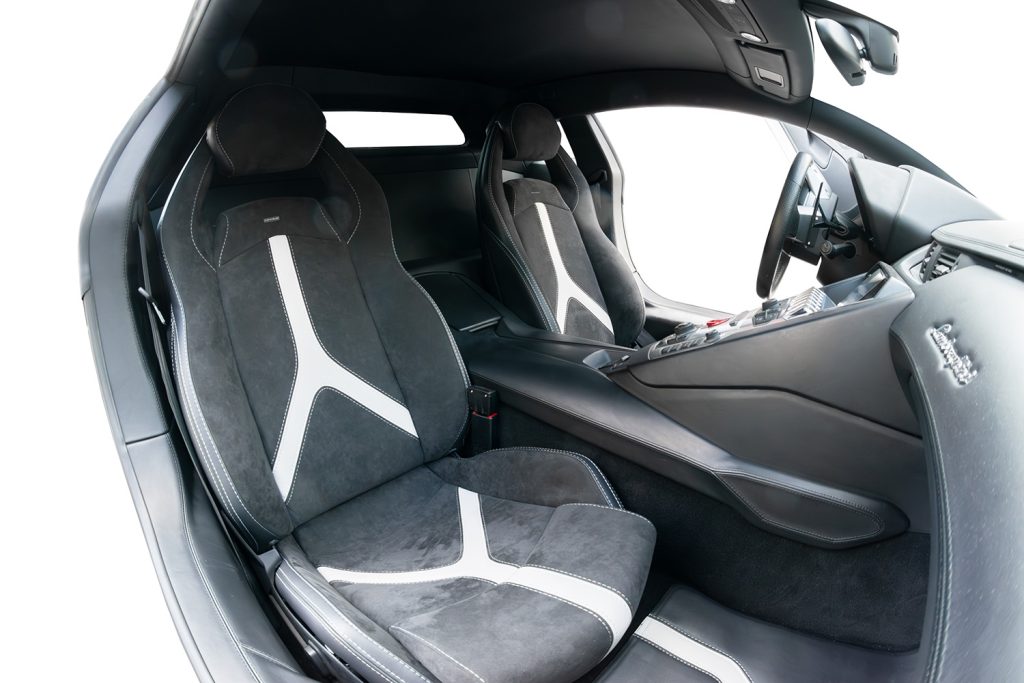
With such a large group and a diverse portfolio, seats, trim levels, safety features, and design details change more often than people realize. That’s why it’s important for us to keep up—adapting to updates across model lines and continuously adding new ones to our portfolio.
DIFFERENCES BETWEEN MODELS AND THEIR TARGET AUDIENCES
Brands within the VW Group differ significantly, and each targets a specific audience. If you’re a family, you’ll most likely choose between Volkswagen, Škoda, or SEAT—ideally in an estate/wagon version. You can also look at more premium options, such as Audi.
If you’re looking for fleet vehicles, the most common choice is Škoda—especially the Octavia, which is also reflected in the brand’s annual report.
Want something more fun, but still affordable? Models like the Golf—or its sportier version, the Golf GTI—are made for you. The same goes for CUPRA, SEAT’s sportier sister brand.
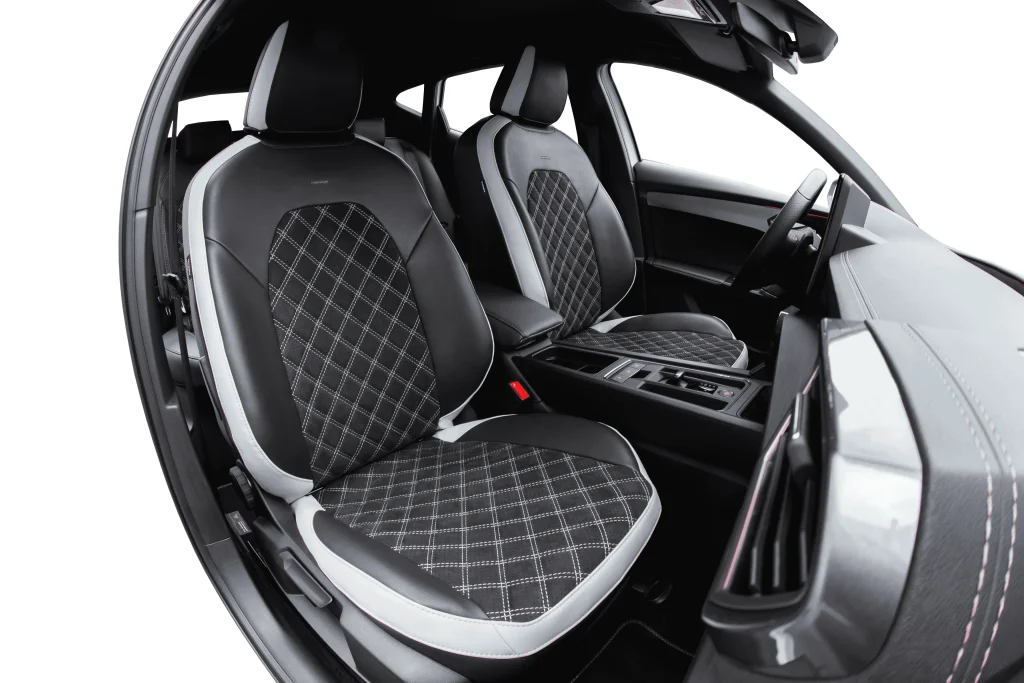
Among mainstream brands like SEAT, Volkswagen, or Škoda, you’ll find more similarities than you might expect—whether it’s shared parts or even entire platforms these cars are built on. But the same can’t be said for interiors, where craftsmanship, materials, and overall quality can vary significantly from one model to another.
BRANDS BY “WORLDS”
Mainstream brands like Volkswagen, Škoda, and SEAT typically feature practical interiors, often combining leather and automotive textiles. These vehicles generate the most inquiries for us, because customers choose seat protection mainly for everyday use—frequent getting in and out, protection from pets, or our baby package designed to protect against the smallest passengers. These brands are also known as a common choice for companies with fleets. Given their daily workload, protecting their interiors is essential to increase durability and keep the vehicles in better condition for longer.
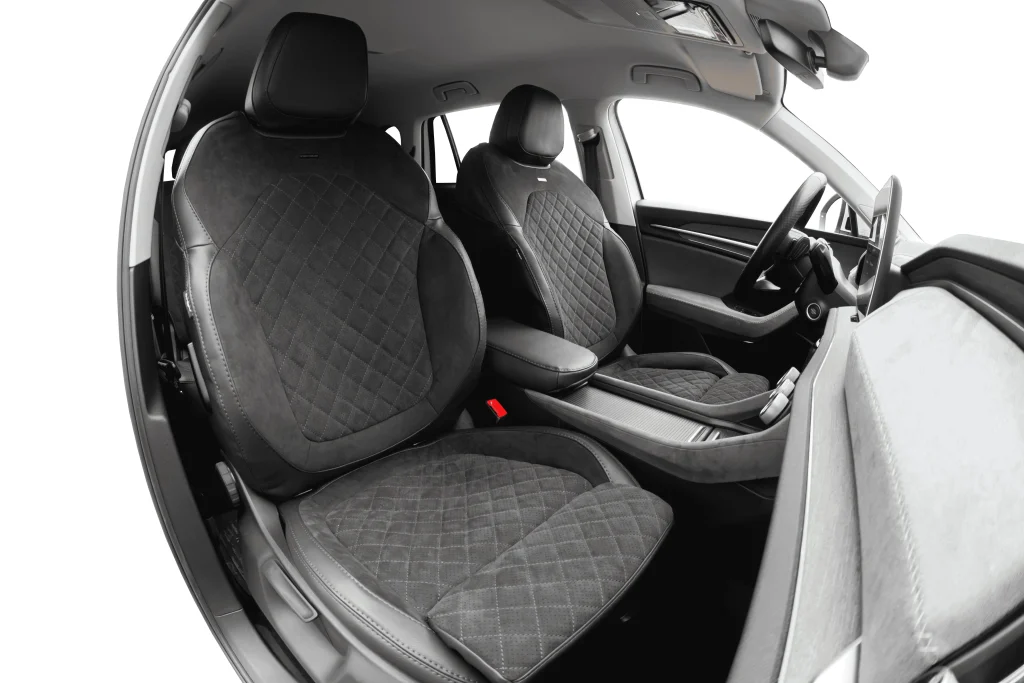
Premium brands like Audi or CUPRA often have interiors that can be more prone to damage due to the materials used, and they place a stronger emphasis on details and seat functionality. When protecting these interiors, it’s important that custom interior solutions respect OEM specifications and preserve all existing seat functions.
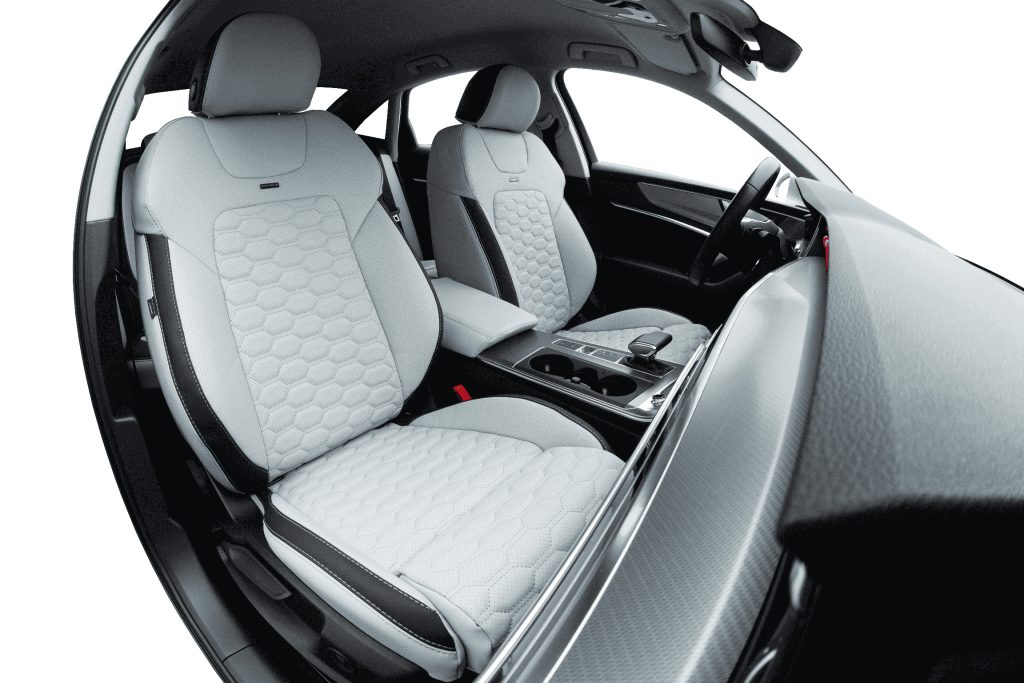
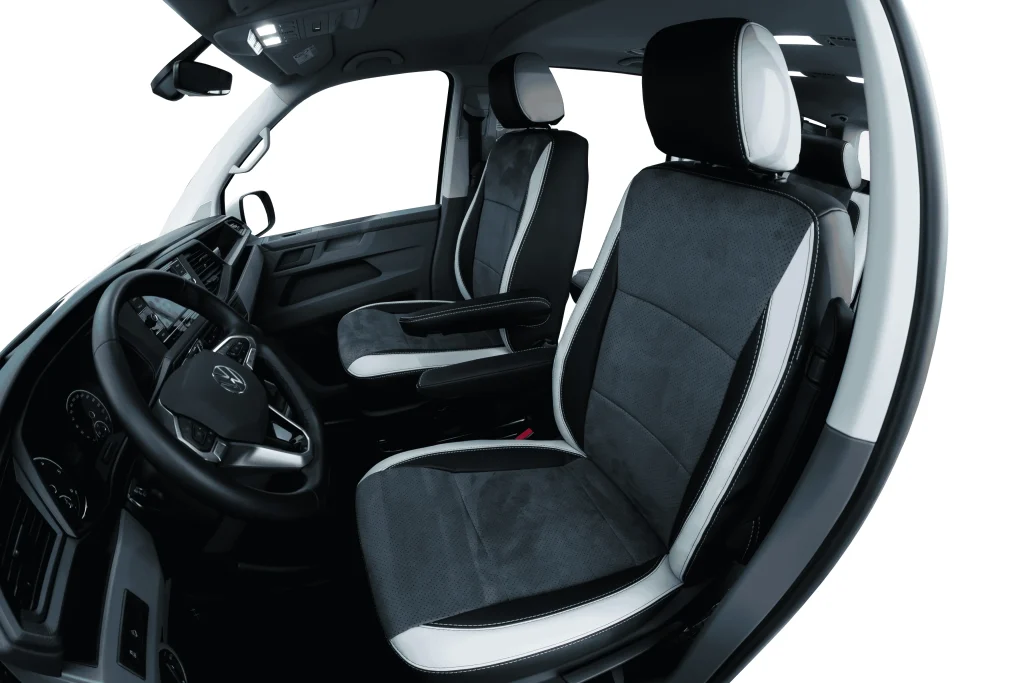
Commercial vehicles within the VW Group are exactly where seat and interior protection matters most. These vehicles face the toughest conditions and are truly work tools. Very frequent entry and exit, drivers often wearing work clothes, and overall heavy use are all reasons why it’s important to protect them from day one. That’s why our solutions provide comprehensive protection combined with easy maintenance.
DIFFERENCES IN PRACTICE
Seats don’t differ only in their shape, but mainly in their functions. There are major differences even between the driver’s seat and the passenger seat. For us, it’s essential to take into account heating, ventilation, various occupancy sensors, active headrests, and ISOFIX. That’s why every custom interior solution must respect not only the design, but also the functional elements of the seats.
Within a single vehicle model, there can be multiple seat and interior variants. Sport-oriented trims typically have integrated headrests, while comfort-focused versions may feature active, adjustable headrests. The same applies to backrests: sporty seats often have a more “bucket-style” design, while standard seats are more open, with a more comfortable layout and additional comfort features.
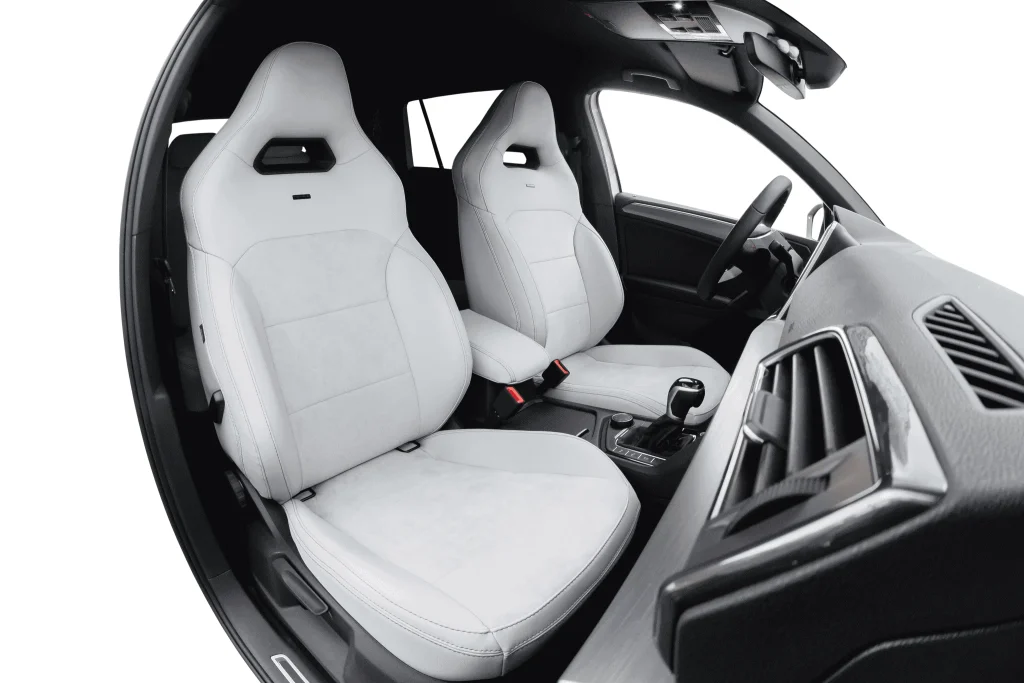
That’s why it’s essential for our products that every pattern is made truly to measure—taking into account all design and functional elements of the seats.
HOW TO PROTECT YOUR SEATS
When choosing a custom car interior, it’s important to consider several factors. The most important one is the purpose the vehicle is used for. Based on that purpose, you should also choose the type of material that will be used inside the vehicle. This choice matters especially because of how the custom interior will be maintained. The heavier the vehicle’s day-to-day use, the more important it is that care and cleaning are quick and simple. That’s why for work vehicles we always recommend genuine synthetic automotive leather, known for its easy maintenance and straightforward care.
For vehicles where comfort is the priority, choosing Alcantara is an easy decision. In the seat inserts, it helps keep you in place—almost like sitting in a professional sports car.
INTERESTED IN A CUSTOM INTERIOR
If you’re seriously interested in protecting your seats and your vehicle’s interior, don’t hesitate to contact us. We’ll need photos of your interior, along with the brand, model, and year of manufacture. This information is essential for us—especially to preserve OEM interior functionality, as we mentioned in this article.
Don’t postpone protecting your interior—choose from over a million combinations of materials and stitching, tailored exactly to your style and preferences.
Contacts




 Contact us
1
-
Close
How can we help you? Select your language
- Online Slovenský jazyk
- Online Deutsche Sprache
- Online Magyar nyelv
- Online English language